
Character home renovations & extensions in Newcastle.
Newcastle's inner and coastal suburbs hold one of the richest and most varied collections of Victorian, Federation and Inter-war housing in the Hunter — shaped by more than a century of mining, industry and, more recently, a very different kind of demand for that same housing stock.
Housing built on mining land.
Much of inner Newcastle's residential character traces back to the Australian Agricultural Company, which held a large original land grant across what's now Cooks Hill, Hamilton and The Junction. As the company progressively sold off parcels of that land from the 1850s onward, the resulting subdivisions filled in with workers' cottages, terraces and — as the decades passed and the city's fortunes shifted — increasingly grand Federation-era residences on the more elevated, desirable blocks. The Junction's Glebe Road precinct, for example, is a largely intact group of Federation cottages built between 1909 and 1915 on what was the area's first residential subdivision.
That layered history is exactly why renovation approaches vary so much across Newcastle's character suburbs — a Cooks Hill terrace from the 1880s and a Hamilton Federation bungalow from the 1910s are different buildings with different structural realities, even though they sit only a few streets apart. Newcastle's older housing stock also carries a more recent structural chapter worth understanding: the 1989 earthquake caused significant damage across the inner suburbs, and many older buildings underwent structural repair or reinforcement in the years that followed. Knowing what to look for behind the walls of an older Newcastle home — including any prior earthquake-related remediation — is genuinely useful knowledge, not just heritage trivia.
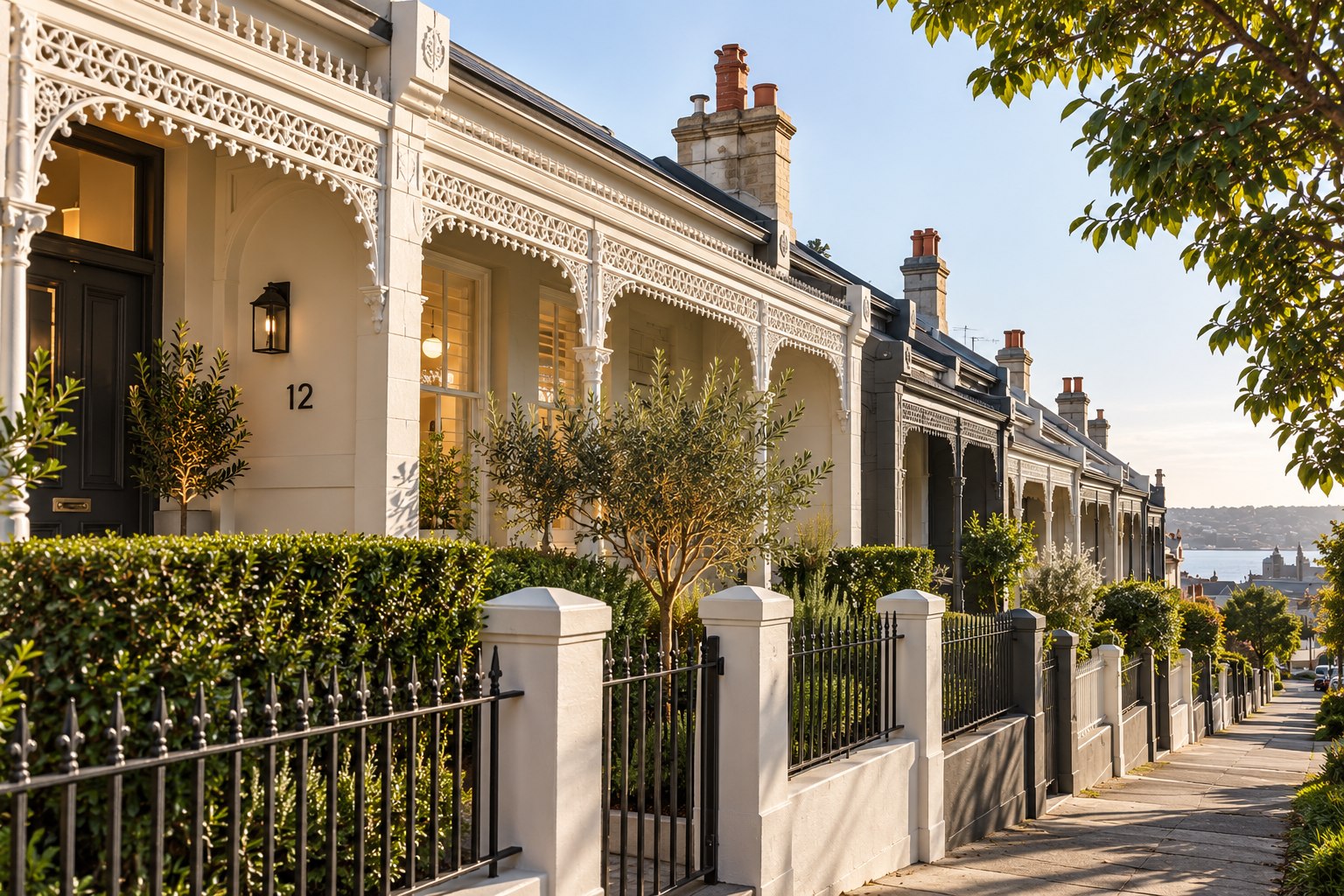
Newcastle's coastal character suburbs — Merewether and Bar Beach in particular — add another layer again: character homes here are frequently extended to make the most of an ocean-adjacent position, often blending the retained heritage frontage with a more contemporary, light-filled rear addition designed around the coastal lifestyle rather than trying to replicate the original architecture throughout.
Newcastle's character suburbs.
Cooks Hill
Tree-lined streets of Victorian terrace housing and turn-of-the-century timber cottages, immediately southwest of the CBD.
The Hill
Elevated character housing close to the harbour and CBD, with a mix of Victorian and Federation-era homes.
Hamilton
A recognised heritage conservation area spanning late Victorian terraces and cottages through to Federation and Inter-war bungalows in a range of period styles.
The Junction
Home to some of Newcastle's finest intact Federation cottages, including a heritage-recognised precinct of homes built in the 1909–1915 period.
Merewether
Coastal character housing where Federation and Inter-war homes sit close to the beach, often now extended to make the most of that position.
Lambton & New Lambton
Established residential suburbs with their own mining-era history and a good stock of early twentieth century character homes.
What actually differs from suburb to suburb.
A Cooks Hill terrace typically sits hard against the street with little or no side setback, which shapes how an extension can happen at all — usually meaning working within the existing footprint or extending carefully to the rear rather than out to the sides. A Hamilton or Merewether Federation bungalow, by contrast, often sits on a more generous block with room to extend outward as well as backward, but comes with its own considerations around verandahs, gable ends and the timber fretwork that defines the style. Getting a feel for these differences on site, rather than applying a single generic approach across the city, is a large part of what makes a Newcastle character-home renovation succeed or fall flat.
Respecting what the street sees.
A recurring theme across Newcastle's heritage conservation areas — Cooks Hill and Hamilton in particular — is the importance of the existing building's proportions, roof form and street presentation, and how new construction relates to it. That's consistent with our own approach: keep the original facade doing the talking from the street, and let considered new work happen predominantly to the rear or in ways that don't compete with what's already there.
In practice that often means retaining the existing frontage and materials, and detailing a rear addition — sometimes contrasting deliberately with the original in materials and form — so the transition between old and new reads as a considered decision rather than an afterthought. Which approach suits a particular home depends on the property, the street, and what the owners actually want from the finished result.
See more on how we approach character home renovations and extensions, or explore our other areas we build throughout the Hunter and surrounding regions.
Renovating or extending a Newcastle character home?
Tell us about your home and what you're hoping to achieve.